In later a long time, the world of restorative science has seen groundbreaking progressions in the field of neurotechnology. One of the most progressive improvements has been the fruitful utilize of brain inserts to reestablish discourse in patients who have misplaced the capacity to communicate due to loss of motion or neurological maladies. These patients, who once seem as it were depend on simple shapes of communication such as eye development or computer-assisted writing, can presently express themselves with near-natural familiarity, much appreciated to cutting-edge brain-computer interface (BCI) technology.
The Challenge of Discourse Loss
Every year, thousands of individuals lose their capacity to talk since of strokes, traumatic brain wounds, or infections like amyotrophic sidelong sclerosis (ALS). The capacity to talk is a complex neurological handle that includes a few districts of the brain working in concordance. Harm to any of these ranges can result in fractional or total misfortune of verbal communication. For decades, specialists and analysts have worked on different assistive advances, but none seem genuinely imitate the speed, tone, and feeling of characteristic speech—until now.
Understanding Brain-Computer Interfacing (BCIs)
At the heart of this breakthrough are BCIs—devices that make a coordinate communication pathway between the brain and an outside gadget, frequently a computer or a mechanical appendage. Customarily, BCIs have been utilized to offer assistance patients move prosthetic appendages or control cursors on a screen utilizing their considerations. In any case, discourse rebuilding presents a distant more perplexing challenge, including interpreting profoundly complex neural signals in genuine time.
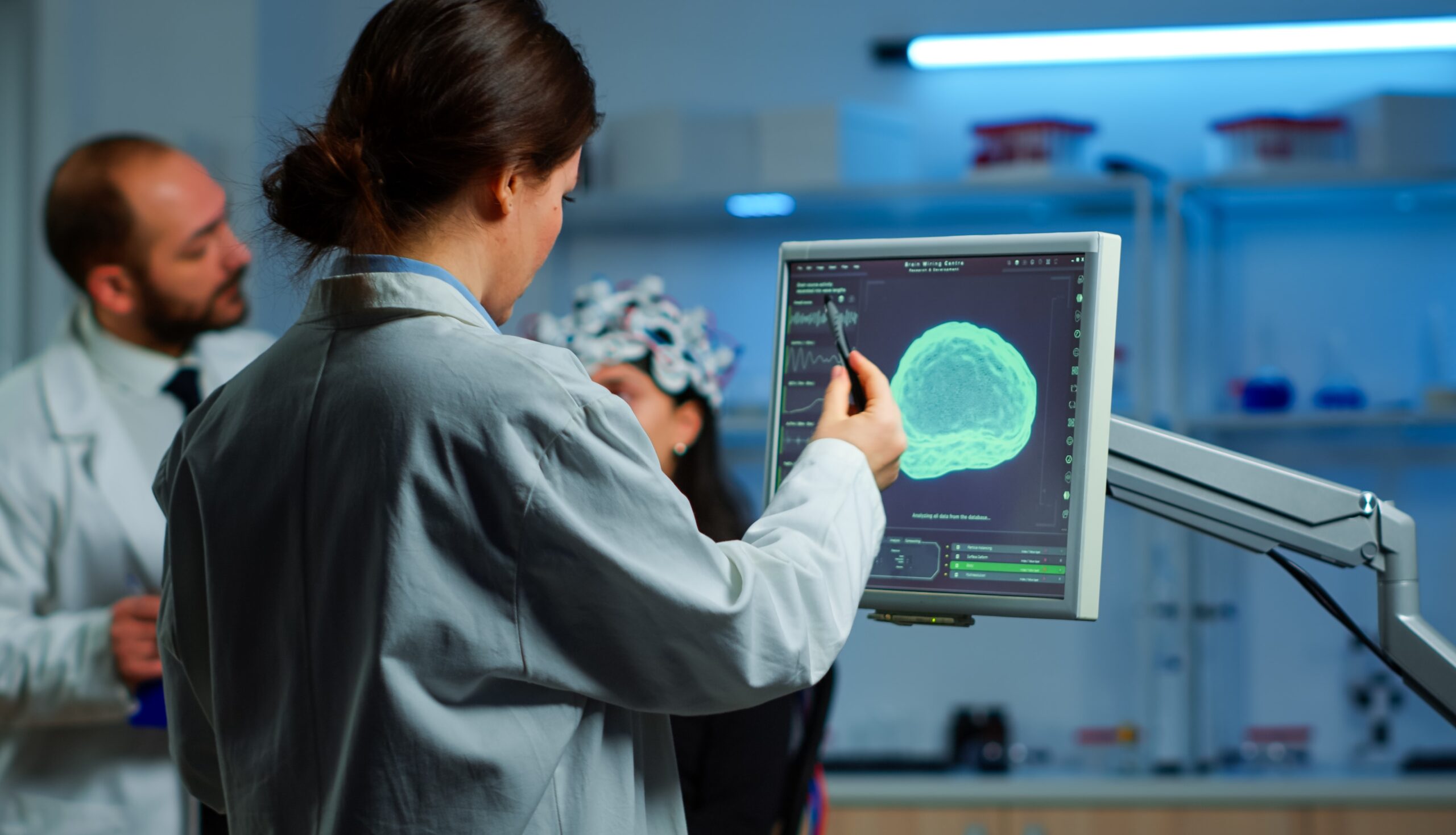
Brain inserts utilized for discourse rebuilding are surgically embedded into regions of the brain dependable for dialect generation, such as Broca’s range and the engine cortex. These inserts are prepared with microelectrodes that identify neural terminating designs when the individual envisions talking particular words or expressions. Progressed computer program calculations at that point translate these signals and interpret them into capable of being heard discourse or text.
Recent Breakthroughs in Discourse Restoration
In 2023 and 2024, a few high-profile considers risen that illustrated the genuine potential of this innovation. Outstandingly, analysts at the College of California, San Francisco (UCSF) and Stanford College effectively empowered two paralyzed patients to talk once more utilizing neural implants.
One of the most momentous cases included a middle-aged man who had misplaced his capacity to talk after a serious stroke over 15 a long time back. A group of neuroscientists embedded an cathode cluster onto the surface of his brain and prepared an AI-powered calculation to translate his brain action. After months of preparing, the framework might create sentences in genuine time with over 75 words per minute—nearly half the speed of normal human speech.
Another case included a lady with ALS who had misplaced deliberate muscle control. Through a comparative BCI framework, analysts decoded signals from her brain and reproduced her voice utilizing a personalized advanced voice demonstrate prepared on recordings from some time recently her sickness. The passionate affect of hearing her claim voice once more moved both the quiet and the analysts to tears.
How the Innovation Works
The handle of reestablishing discourse through brain inserts can be broken down into a few key steps:
Neural Flag Securing: Anodes embedded in the brain record electrical movement from neurons related with discourse arranging and articulation.
Signal Handling: The recorded neural signals are sifted and cleaned utilizing flag preparing strategies to dispense with commotion and unessential data.
Decoding Calculations: Machine learning models translate the cleaned signals and anticipate the expecting words or phonemes (essential units of sound).
Speech Amalgamation: The anticipated words are at that point changed over into sound yield utilizing a computerized discourse synthesizer or shown as content on a screen.
Real-Time Input: Patients get input nearly momentarily, permitting them to refine their considerations and progress precision over time.
Ethical and Restorative Considerations
As with any intrusive method, brain inserts carry dangers such as disease, tissue harm, or long-term neurological impacts. In any case, the benefits for patients who are something else bolted interior their claim bodies can distant exceed the dangers. Educated assent and continuous observing are basic components of any BCI-related treatment plan.
Ethical concerns have too risen with respect to security and information security. Since brain inserts record profoundly individual considerations and eagerly, it is imperative to guarantee that this information is secured against abuse. Besides, the potential for future applications—such as thought-based informing or inaccessible brain control—raises questions around the boundaries of human independence and free will.
Future Bearings and Potential
Despite the challenges, the future of brain-implant innovation looks inconceivably promising. Researchers are as of now working on making the inserts remote, diminishing the require for bulky equipment and making the framework more comfortable for long-term utilize. Other investigate is centered on growing the lexicon and passionate extend of AI discourse models so that patients can communicate with more prominent subtlety and expression.
Further integration with counterfeit insights might lead to indeed quicker and more exact interpreting. There is moreover progressing inquire about into non-invasive options, such as wearable EEG headsets, in spite of the fact that these right now need the accuracy of embedded devices.
In the long run, this innovation seem be adjusted for multilingual communication, permitting patients to switch dialects with thought commands, or indeed empowering interpretation in genuine time. Recovery centers and healing centers may in the long run offer BCI treatment as a standard portion of stroke or damage recovery.
Voices Reestablished, Lives Transformed
For patients who have went through a long time incapable to talk with adored ones, the return of their voice is nothing brief of marvelous. It reestablishes not as it were the capacity to communicate but moreover a sense of personality, office, and enthusiastic association. Companions and family individuals report significant changes in their connections, as discussions once thought outlandish presently happen daily.